Langtang Valley Trek

12 Days

The Langtang Valley Trek begins in Thulo Syabru and leads through the spectacular landscapes of the Langtang region. The journey passes through Lama Hotel, known for its peaceful surroundings and beautiful forests, before continuing through lush rhododendron and oak forests, riverside trails, alpine meadows, and mountain valleys. The route gradually ascends through Langtang Village, Kyanjin Gompa, and Kyanjin Ri (4,773 m) to spectacular Himalayan viewpoints. With panoramic views of Langtang Lirung, Langtang II, Yala Peak, Dorje Lakpa, and Ganesh Himal, this trek combines authentic Tamang culture, diverse landscapes, and unforgettable Himalayan adventure with Monkvana.

ℹ️ Price Information

The displayed price is per person, based on a typical group size of 5–8 travellers. The final price may vary depending on your selected departure date and group size. Please see the Scheduled Departures & Group Discounts section below for available departure dates and applicable group rates.

  • Kathmandu
  • Kathmandu
  • Jeep & Bus
  • Hotel & lodge
  • 4,984 Meters
  • Spring & Autumn
  • 3 Meals a Day
  • Included
  • HMT-242
  • 2-16 People
  • Nepali Guide
  • English | German
  • Tea House Trek

Trip Overview

The Langtang Valley Trek Nepal is one of the most rewarding Himalayan trekking experiences, combining spectacular mountain scenery, rich Tamang culture, peaceful trails, and diverse landscapes within Langtang National Park. The trek takes you from the foothills north of Kathmandu through traditional mountain villages, lush rhododendron and oak forests, cascading waterfalls, river valleys, alpine meadows, and rugged Himalayan terrain toward Kyanjin Gompa (3,870 m / 12,697 ft.). Along the way, you can enjoy breathtaking views of Langtang Lirung, Langtang II, Dorje Lakpa, Yala Peak, and other Himalayan mountains.

The journey begins with a scenic drive from Kathmandu to Syabrubesi (1,550 m / 5,085 ft.), the main gateway to the Langtang Valley Trek. From Syabrubesi, the trail follows the Langtang Khola through dense forests, traditional Tamang settlements, suspension bridges, waterfalls, and peaceful mountain landscapes. As you gradually gain altitude, the scenery changes from green hills and forested valleys to open alpine terrain and dramatic Himalayan peaks.

Trekking Through Syabrubesi and the Lower Langtang Valley

The Langtang Valley Trek begins at Syabrubesi, a traditional mountain settlement surrounded by green hills and forested slopes. From here, the trail follows the Langtang Khola through peaceful woodland landscapes toward the upper valley.

The route passes through dense rhododendron, oak, maple, and pine forests, creating a scenic and refreshing walking environment. The sound of the river, waterfalls, birds, and mountain streams accompanies trekkers along much of the trail.

As the trek continues toward Lama Hotel, the valley gradually becomes narrower and more dramatic. Traditional villages, stone walls, prayer flags, and Buddhist monuments introduce trekkers to the cultural heritage of the Langtang region.

Langtang Village and the Changing Himalayan Landscape

The trail continues through the Langtang Valley toward Langtang Village (3,430 m / 11,253 ft.), an important settlement surrounded by spectacular mountain scenery. The village offers an opportunity to experience the traditions, hospitality, and mountain lifestyle of the local Tamang communities.

Beyond Langtang Village, the landscape gradually changes as the trail climbs higher. The route passes through smaller settlements, stone-built houses, yak pastures, Buddhist prayer flags, mani walls, and open mountain meadows.

With every step toward the upper valley, the Himalayan scenery becomes more dramatic. The surrounding peaks appear closer while the forests gradually give way to alpine vegetation, creating a striking transition from the lush lower valley to the high Himalayan environment.

Kyanjin Gompa – The Heart of the Upper Langtang Valley

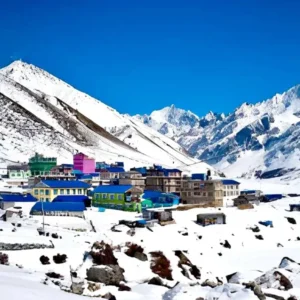
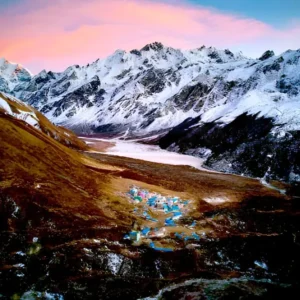
Continuing from Langtang Village, the trail climbs toward Kyanjin Gompa (3,870 m / 12,697 ft.), the highest permanent settlement on the standard Langtang Valley Trek. This spectacular mountain settlement sits in an open alpine valley surrounded by towering Himalayan peaks.

The landscape around Kyanjin Gompa is dramatically different from the lower sections of the trek. Dense forests disappear, while alpine meadows, rocky slopes, glacial streams, and snow-covered mountains dominate the scenery.

The magnificent Langtang Lirung rises prominently above the valley, creating one of the most impressive mountain views of the trek. Kyanjin Gompa also provides an excellent base for exploring the surrounding alpine landscapes and nearby viewpoints.

Trekkers can visit the monastery, explore nearby yak pastures, walk through the surrounding valley, and enjoy panoramic views of the Himalayan peaks before undertaking the higher viewpoint hikes.

Kyanjin Ri or Tserko Ri – The Highlight of the Langtang Trek

One of the major highlights of the Langtang Valley Trek Nepal is the opportunity to hike to one of the high viewpoints above Kyanjin Gompa. Depending on the itinerary, trekkers can climb Kyanjin Ri or Tserko Ri for spectacular panoramic views across the Langtang Himalayas.

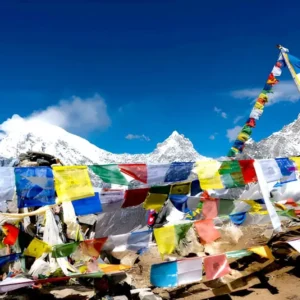
From these viewpoints, Langtang Lirung dominates the skyline, while Langtang II, Dorje Lakpa, Yala Peak, Ganesh Himal, and other surrounding mountains create an unforgettable Himalayan panorama.

The higher viewpoint hike provides a rewarding high-altitude adventure, with increasingly expansive views of the Langtang Valley, glaciers, alpine ridges, and snow-covered peaks. Reaching the viewpoint and standing above the valley surrounded by dramatic Himalayan scenery creates a strong sense of achievement.

After enjoying the panoramic mountain views, trekkers return to Kyanjin Gompa, where they can relax and appreciate the peaceful alpine surroundings.

Authentic Tamang Culture and Himalayan Village Life

A major attraction of the Langtang Valley Trek is the opportunity to experience authentic Tamang culture and traditional Himalayan village life. Throughout the route, trekkers encounter traditional stone houses, Buddhist monasteries, prayer wheels, mani walls, prayer flags, and welcoming local communities.

The cultural experience adds depth to the mountain adventure. Rather than simply passing through the Himalayas, travelers have opportunities to experience the traditions, customs, architecture, and daily lifestyle of communities living in the Langtang region.

The strong influence of Tibetan Buddhist culture can be seen throughout the valley, giving the trek a distinctive cultural character that complements its spectacular natural scenery.

Langtang National Park and Himalayan Forests

The Langtang Valley Trek passes through the diverse landscapes of Langtang National Park, an important protected area known for its forests, mountains, wildlife, and rich Himalayan biodiversity.

The lower trekking sections feature beautiful forests of rhododendron, oak, maple, pine, and other Himalayan vegetation. During spring, rhododendron flowers add vibrant colors to the forest, creating a beautiful contrast with the green hillsides and distant snow-covered mountains.

As the elevation increases, the dense forests gradually transition into alpine meadows, rocky slopes, and open Himalayan landscapes. This dramatic change in vegetation and scenery is one of the defining characteristics of the Langtang Valley Trek.

Spectacular Views of Langtang Lirung and the Himalayas

The mountain scenery is one of the biggest reasons travelers choose the Langtang Valley Trek Nepal. Among the many peaks visible along the route, Langtang Lirung is the most prominent and recognizable mountain.

The trek also offers impressive views of Langtang II, Dorje Lakpa, Yala Peak, Ganesh Himal, and numerous surrounding Himalayan peaks. As the trail approaches Kyanjin Gompa, the mountains become increasingly close and dramatic.

The combination of towering peaks, glaciers, alpine valleys, rocky ridges, and traditional mountain settlements creates exceptional opportunities for photography and memorable Himalayan experiences.

Exploration Around Kyanjin Gompa

A stay at Kyanjin Gompa allows trekkers to explore the upper Langtang Valley without rushing. The surrounding area offers peaceful walks through alpine meadows, traditional yak pastures, glacial landscapes, and dramatic mountain scenery.

Trekkers can visit Kyanjin Gompa, explore the surrounding valley, and enjoy close-up views of Langtang Lirung and the surrounding Himalayan peaks.

For those seeking an additional challenge, the hikes to Kyanjin Ri or Tserko Ri provide some of the finest viewpoints of the entire trek. These high-altitude hikes add an adventurous element while offering expansive views across the Langtang Himalayas.

Descent Through the Langtang Valley

After exploring Kyanjin Gompa and the surrounding mountains, the trail begins its descent through the Langtang Valley. The return journey follows the valley through alpine landscapes, traditional villages, forests, and river valleys.

As the altitude decreases, the landscape gradually becomes greener. The rocky alpine terrain gives way to forests and lower mountain landscapes, providing a noticeable contrast to the scenery experienced during the ascent.

The descent continues through Lama Hotel and the lower Langtang Valley before reaching Syabrubesi, completing the trekking section of the journey.

Return to Kathmandu

After completing the Langtang Valley Trek, a scenic drive takes you from Syabrubesi back to Kathmandu. The journey passes through winding mountain roads, green hills, river valleys, terraced farmland, and rural settlements.

After several days in the mountains, returning to Kathmandu provides an opportunity to relax and enjoy the city's vibrant atmosphere. You can explore Thamel, discover local markets, visit historic cultural sites, enjoy traditional Nepali cuisine, or simply rest after the trek.

Relax and Explore Kathmandu

A buffer day in Kathmandu can provide a comfortable conclusion to the Langtang trekking adventure. After returning from the mountains, you can explore the city's cultural heritage, visit ancient temples and courtyards, discover local markets, or enjoy a relaxed evening in Thamel.

This additional time also allows you to enjoy Kathmandu without rushing before your departure, making the overall Langtang Valley Trek Nepal experience more comfortable and enjoyable.

A Complete Langtang Valley Trek Experience

The Langtang Valley Trek Nepal combines spectacular Himalayan scenery, authentic Tamang culture, Buddhist heritage, peaceful forest trails, traditional mountain villages, alpine landscapes, and rewarding high-altitude experiences. From the forests and villages around Syabrubesi and Lama Hotel to the culturally rich Langtang Village, and from the dramatic landscapes of Kyanjin Gompa to the panoramic viewpoints of Kyanjin Ri and Tserko Ri, every stage of the trek offers a unique Himalayan experience.

With breathtaking views of Langtang Lirung, Langtang II, Dorje Lakpa, Yala Peak, Ganesh Himal, and surrounding Himalayan mountains, combined with traditional villages, rhododendron forests, Buddhist culture, alpine valleys, and diverse landscapes, the Langtang Valley Trek is an excellent choice for travelers seeking an authentic Himalayan adventure near Kathmandu.

The combination of Langtang trekking, Tamang culture, Langtang National Park, spectacular mountain views, traditional Himalayan villages, Buddhist heritage, alpine landscapes, and peaceful trails makes the Langtang Valley Trek Nepal a truly memorable journey with Monkvana.

Trip Highlights

  • Trek through Langtang Valley with stunning views of Langtang Lirung, alpine landscapes, peaceful trails, and dramatic Himalayan scenery each day.
  • Experience Tamang culture, traditional villages, Buddhist monasteries, prayer flags, stone houses and warm Himalayan hospitality along the trail!
  • Trek through Langtang National Park, home to rhododendron, oaks, pine, maple forests, diverse wildlife, waterfalls, and peaceful mountain trails!
  • Reach Kyanjin Gompa at 3,830 m, a beautiful alpine settlement surrounded by snowy peaks, glaciers, yak pastures, and spectacular Himalayan views.
  • Follow the Langtang Khola through forests, suspension bridges, waterfalls, river valleys, and trails as the route climbs into the high Himalayas.
  • Hike to the Kyanjin Ri viewpoint at 4,300 m for spectacular views of Langtang Lirung, glaciers, alpine valleys, and snow-capped Himalayan peaks.
  • Hike to Tserko Ri at 4,984 m for Himalayan panoramas, with views of Langtang Lirung, glaciers, alpine landscapes, and snowy Himalayan peaks.
  • Enjoy spectacular views of Langtang Lirung, Langtang II, Dorje Lakpa, Yala Peak, and surrounding snow-capped Himalayan peaks throughout the trek.
  • Complete a Langtang Valley Trek with mountain views, Tamang culture, alpine scenery, and a cultural tour of Kathmandu’s UNESCO World Heritage Sites.

Tour Itinerary

  • Day
    01

    Arrival in Kathmandu – Airport Pickup & Hotel Transfer

    Upon arrival at Tribhuvan International Airport in Kathmandu, you will be warmly welcomed by a representative of Monkvana | Himalayan Monks Sp. z o.o., operating through its local partner, Jagdamba Holidays. Our representative will be waiting with an official Monkvana sign and a traditional marigold garland to welcome you to Nepal.

    You will then be transferred by private vehicle to your hotel. For late-night arrivals, transportation will be arranged according to your arrival time.

    Your representative will also provide information about the tour briefing and group meeting. During the briefing, we will review your travel plans and included services and introduce you to your trekking or tour guide.

    Before the journey begins, all participants will complete the required travel and liability forms. Any outstanding tour balance should also be settled during the meeting.

    45 minute
    Breakfast
    Hotel Kailash Kutee
  • Day
    02

    Drive from Kathmandu to Thulo Bharkhu – Langtang Adventure Begins

    After a hearty breakfast at the hotel in Kathmandu, the journey begins along a scenic mountain highway through a hilly landscape, heading towards Thulo Bharkhu (1,920 metres / 6,299 feet), the main gateway to the Langtang region. The route covers approximately 107 kilometres and typically takes 6–7 hours by road, depending on traffic and weather conditions. As the drive moves away from the capital, urban surroundings gradually give way to green hills, terraced farmland, and small rural settlements.

    For much of the journey, the road follows the Tokha, Likhu River, Bidur, and Trishuli River, offering views across river valleys and surrounding terrain. On clear days, distant views of Ganesh Himal (7,422 metres / 24,350 feet), Langtang Lirung (7,227 metres / 23,711 feet), and other Himalayan peaks can be seen along the way. Lunch will be arranged by your guide at a suitable restaurant or teahouse along the route, according to your needs and appetite. Short stops may also be made in towns such as Trishuli Bazaar and Dhunche (1,960 metres / 6,430 feet) for refreshments and basic facilities.

    Upon arrival at Thulo Bharkhu (1,920 m / 6,299 ft), check in at Paramendo Eco Farming Lodge or a similar standard hotel. Accommodation is provided in twin-, triple-, or quad-sharing rooms, subject to availability, with shared bathroom facilities, with breakfast and dinner included. The remainder of the day is free to relax, enjoy the mountain surroundings, and prepare for the Langtang Valley Trek ahead.

    Note: Due to the devastating flash floods on Bhadra 10, 2083 BS (August 26, 2026), the road section leading to Syabrubesi has been severely affected. Therefore, this portion of the original route will be temporarily skipped, and the itinerary will follow an alternative route where necessary. Once the road is restored and safe for travel, we will resume the original route to Syabrubesi as planned.

    7 minute
    Breakfast + Lunch + Dinner
    Tea House
  • Day
    03

    Trek from Thulo Bharkhu to Bamboo via Thulo Syabru

    After breakfast at Thulo Bharkhu (1,920 m / 6,299 ft), begin your trek toward Bamboo (2,014 m / 6,608 ft) via Thulo Syabru. The trail passes through beautiful forests, traditional mountain settlements, and scenic landscapes as you enter deeper into the Langtang Valley. The route through Thulo Syabru offers a wonderful introduction to the natural and cultural beauty of the Langtang region, with views of lush hills, river valleys, and surrounding Himalayan terrain.

    The trek covers approximately 15 km and takes around 5–6 hours, with an elevation gain of about 880 m / 2,887 ft and an elevation loss of around 780 m / 2,559 ft due to the natural ups and downs of the trail. Lunch will be arranged by your guide at a suitable teahouse along the trail, according to your needs and appetite. Continuing through the changing landscapes beyond Thulo Syabru, the trail provides a rewarding and authentic Langtang Valley trekking experience.

    Upon arrival at Bamboo (2,014 m / 6,608 ft), check in at Hotel Bamboo & Lodge or a similar standard lodge. Accommodation is provided in twin-, triple-, or quad-sharing rooms, subject to availability, with shared bathroom facilities, with breakfast and dinner included. The remainder of the day is free to relax, enjoy the peaceful mountain surroundings, and prepare for the next day of your Langtang Valley Trek.

    6 hour
    Breakfast + Lunch + Dinner
    Tea House
  • Day
    04

    Trek from Bamboo to Thangsyap via Lama Hotel

    After breakfast at Bamboo (2,014 m), begin your trek toward Thangsyap (3,140 m) via Lama Hotel (2,480 m). The trail follows the beautiful Langtang Khola through dense forests of bamboo, rhododendron, and oak, with peaceful river views and scenic Himalayan surroundings. As you gradually gain elevation, the trail offers a wonderful combination of natural beauty and authentic mountain landscapes in the Langtang Valley.

    The trek covers approximately 11.5 km and takes around 5–6 hours, with a total elevation gain of about 1,140 m and no elevation loss. Lunch will be arranged by your guide at a suitable teahouse along the trail, according to your needs and appetite. After passing through Lama Hotel, continue along the forested trail toward Thangsyap, enjoying the changing landscapes and increasingly impressive mountain scenery along the way.

    Upon arrival at Thangsyap (3,140 m), check in at Buddha Guest House or a similar standard lodge. Accommodation is provided in twin-, triple-, or quad-sharing rooms, subject to availability, with shared bathroom facilities, with breakfast and dinner included. The remainder of the day is free to relax, enjoy the peaceful mountain surroundings, and prepare for the next stage of your Langtang Valley Trek.

    6 hour
    Breakfast + Lunch + Dinner
    Tea House
  • Day
    05

    Trek from Thangsyap to Kyanjin via Langtang Village

    After breakfast at Thangsyap (3,140 m), begin your trek toward Kyanjin (3,830 m) via Langtang Village (3,430 m), one of the most significant sections of the Langtang Valley Trek. The trail takes you deeper into the Himalayan landscape, with spectacular views of Langtang Lirung (7,227 m) and surrounding snow-capped peaks. Passing through Langtang Village also offers a meaningful glimpse into the region’s culture, history, and resilience following the devastating earthquake of 2015.

    The trek covers approximately 10.5 km and takes around 5–6 hours, with an elevation gain of about 730 m and an elevation loss of around 50 m due to natural trail variations. Lunch will be arranged by your guide at a suitable teahouse along the trail, according to your needs and appetite. The route passes through forests of pine, oak, and rhododendron, traditional mountain settlements, and scenic landscapes as you gradually approach Kyanjin. The changing surroundings and impressive Himalayan views make this a rewarding day of trekking.

    Upon arrival at Kyanjin (3,830 m), check in at Namaste Guest House or a similar standard lodge. Accommodation is provided in twin-, triple-, or quad-sharing rooms, subject to availability, with shared bathroom facilities, with breakfast and dinner included. The remainder of the day is free to relax, explore the peaceful mountain village, visit Kyanjin Gumba, and enjoy the spectacular Himalayan surroundings. Kyanjin also provides an ideal opportunity to rest and acclimatise before exploring the higher viewpoints of the Langtang Valley.

    7 hour
    Breakfast + Lunch + Dinner
    Tea House
  • Day
    06

    Rest Day in Kyanjin or Optional Hike to Tserko Ri (4,984 m)

    After breakfast at Kyanjin (3,830 m), enjoy a well-deserved rest and acclimatisation day in the heart of the Langtang Valley. You can relax and explore the peaceful mountain village, visit Kyanjin Gumba, or take a short walk around the surrounding alpine landscape. For those seeking a more challenging adventure, an optional hike to Tserko Ri (4,984 m) offers spectacular Himalayan views and an unforgettable high-altitude experience.

    The optional Tserko Ri hike covers approximately 9.6 km round trip and takes around 7–9 hours, with an elevation gain of about 1,090 m and an elevation loss of around 1,090 m. The trail climbs steeply through alpine meadows and yak pastures, offering impressive views of Langtang Lirung (7,227 m), Langshisa Ri (6,427 m), glaciers, and surrounding snow-capped peaks. As there are no teahouses along the trail, lunch and sufficient drinking water should be prepared before departure.

    Upon reaching Tserko Ri (4,984 m), enjoy panoramic views across the Langtang Valley, glaciers, and the surrounding Himalayan range before descending back to Kyanjin. Alternatively, spend the day relaxing in the village, visiting the local cheese factory, taking photographs, or enjoying the spectacular mountain scenery. Overnight at Namaste Guest House or a similar standard lodge, with breakfast and dinner included.

    9 hour
    Breakfast + Lunch + Dinner
    Tea House
  • Day
    07

    Hike to Kyanjin Ri Viewpoint & Trek to Thangsyap

    After breakfast at Kyanjin (3,830 m), begin the day with an optional hike to Kyanjin Ri Viewpoint (4,300 m), offering spectacular views of Langtang Lirung, surrounding Himalayan peaks, glaciers, and the beautiful Langtang Valley. After enjoying the mountain scenery, return to Kyanjin and continue your trek toward Thangsyap (3,140 m). This section provides a wonderful combination of high-altitude views and scenic Himalayan landscapes.

    The trek covers approximately 10 km and takes around 4–5 hours, with an elevation gain of about 50 m and an elevation loss of around 710 m. The trail gradually descends through alpine landscapes, forests, and traditional mountain settlements, offering changing views of the Langtang Valley along the way. Lunch will be arranged by your guide at a suitable teahouse along the trail, according to your needs and appetite.

    Upon arrival at Thangsyap (3,140 m), check in at Buddha Guest House or a similar standard lodge. Accommodation is provided in twin-, triple-, or quad-sharing rooms, subject to availability, with shared bathroom facilities, with breakfast and dinner included. The remainder of the day is free to relax, enjoy the peaceful mountain surroundings, and recover after the scenic descent from Kyanjin.

    5 hour
    Breakfast + Lunch + Dinner
    Tea House
  • Day
    08

    Trek from Thangsyap to Bamboo via Lama Hotel

    After breakfast at Thangsyap (3,140 m), begin your trek toward Bamboo (2,014 m) via Lama Hotel (2,480 m). The trail gradually descends through the beautiful Langtang Valley, passing through peaceful forests, mountain landscapes, and scenic sections along the Langtang Khola. As you lose elevation, the surrounding vegetation becomes increasingly lush, creating a refreshing contrast to the higher alpine landscapes.

    The trek covers approximately 11.5 km and takes around 4–5 hours, with an elevation gain of about 0 m and an elevation loss of approximately 1,160 m. Lunch will be arranged by your guide at a suitable teahouse along the trail, according to your needs and appetite. The route passes through Lama Hotel before continuing downhill through dense forests of bamboo, rhododendron, and oak toward Bamboo, offering beautiful natural scenery throughout the journey.

    Upon arrival at Bamboo (2,014 m), check in at Hotel Bamboo & Lodge or a similar standard lodge. Accommodation is provided in twin-, triple-, or quad-sharing rooms, subject to availability, with shared bathroom facilities, with breakfast and dinner included. The remainder of the day is free to relax, enjoy the peaceful surroundings, and recover after the descent from Thangsyap.

    5 hour
    Breakfast + Lunch + Dinner
    Tea House
  • Day
    09

    Trek from Bamboo to Thulo Syabru

    After breakfast at Bamboo (2,014 m), begin your trek toward Thulo Syabru (2,250 m). The trail gradually climbs and descends through beautiful forests, peaceful mountain landscapes, and traditional Himalayan surroundings. As you continue along the trail, enjoy the changing scenery and the tranquil atmosphere of the Langtang Valley.

    The trek covers approximately 6.5 km and takes around 4–5 hours, with an elevation gain of about 500 m and an elevation loss of approximately 310 m. Lunch will be arranged by your guide at a suitable teahouse along the trail, according to your needs and appetite. The route combines sections of ascent and descent through forested terrain before gradually approaching Thulo Syabru, offering scenic views along the way.

    Upon arrival at Thulo Syabru (2,250 m), check in at Yak Hotel & Lodge or a similar standard lodge. Accommodation is provided in twin-, triple-, or quad-sharing rooms, subject to availability, with shared bathroom facilities, with breakfast and dinner included. The remainder of the day is free to relax, explore the village, and enjoy the peaceful mountain surroundings after the day's trek.

    5 hour
    Breakfast + Lunch + Dinner
    Tea House
  • Day
    10

    Drive from Thulo Syabru to Kathmandu – Trek Ends

    After breakfast at Thulo Syabru (2,250 m), begin your scenic drive back to Kathmandu (1,400 m) via Dhunche (1,960 m). The journey follows winding mountain roads through the beautiful landscapes of the Langtang region, passing traditional villages, forested hills, river valleys, and terraced farmland. Enjoy the changing scenery as you gradually leave the Himalayan foothills behind.

    The drive covers approximately 118 km and takes around 7–8 hours, depending on road and traffic conditions. Lunch will be arranged by your guide at a suitable restaurant along the route, according to your needs and appetite. The road passes through Dhunche before continuing toward Kathmandu, offering a final opportunity to enjoy the scenic countryside and mountain landscapes of northern Nepal.

    Upon arrival in Thamel, check in at Hotel Kailash Kutee on a twin-sharing basis with a private bathroom, with breakfast included. Take some time to relax and refresh before heading out to explore the lively surroundings of Thamel.

    8 hour
    Breakfast + Lunch
    Hotel Kailash Kutee
  • Day
    11

    Private Guided Cultural & Historic UNESCO Heritage Tour

    After breakfast at the hotel, begin your guided sightseeing tour of the Kathmandu Valley at around 9:00 AM. Travel by private vehicle with your knowledgeable guide and discover some of the valley’s most important cultural and religious landmarks.

    Begin with Bhaktapur Durbar Square, a historic medieval city renowned for its well-preserved Newari architecture, ancient temples, royal courtyards, and intricate wood and stone carvings. Explore highlights such as the 55-Window Palace, Golden Gate, Nyatapola Temple, and Pottery Square while learning about the city’s rich history and traditional culture.

    Continue to Boudhanath Stupa, one of Nepal’s largest Buddhist stupas and an important center of Tibetan Buddhist culture. Walk around the impressive stupa, observe devotees performing ritual prayers, and explore the surrounding monasteries, prayer wheels, and traditional shops.

    Continue your sightseeing at Pashupatinath Temple, one of Nepal’s most sacred Hindu pilgrimage sites, situated along the banks of the Bagmati River. Explore the surrounding temple complex and learn about Hindu traditions, religious rituals, and the spiritual importance of this ancient site.

    After completing the sightseeing tour, return to your hotel with a deeper appreciation of Kathmandu Valley’s diverse cultural heritage, where ancient Newari traditions, Buddhist practices, and Hindu spirituality come together. Enjoy the rest of the day at leisure.

    6 hour
    Breakfast
    Hotel Kailash Kutee
  • Day
    12

    Farewell – Airport Transfer & Departure

    As your Himalayan journey comes to an end, take a moment to reflect on Nepal’s stunning natural beauty, rich cultural heritage, and unforgettable experiences—from majestic mountain landscapes to the warm hospitality of local communities.

    For a smooth departure, a representative of Monkvana | Himalayan Monks Sp. z o.o., operating through its local partner Jagdamba Holidays, will meet you at your hotel approximately 3.5 hours before your scheduled flight and provide a comfortable transfer to Tribhuvan International Airport, Kathmandu.

    Thank you for choosing Monkvana | Himalayan Monks Sp. z o.o. and Jagdamba Holidays. We look forward to welcoming you again on future journeys across the Himalayas and beyond.

    45 minute
    Breakfast
    None

Cost Includes

  • All transfers within Nepal are included as per itinerary
  • Any domestic flight of Nepal as per trekking itinerary
  • Trekking accommodation (hotel, lodge and/or tent) as per itinerary
  • Small shared room with shared bathroom during trek in Nepal
  • In Kathmandu and/or Pokhara: Stay at ***Hotel with breakfast
  • Luggage for porters during the trek (12.5 kg/person)
  • 3 meals (Breakfast, Lunch and Dinner) during the trek
  • Unlimited tea or coffee for breakfast during the trek
  • An English speaking guide (trekking/tour) as per Itinerary
  • Travel insurance for trekking staff (guides and porters)
  • All expenses of trekking staff(s) during trekking
  • Includes all conservation, national park, trekking, and climbing permits
  • Sightseeing / Wildlife tours if included in the itinerary
  • Farewell dinner in Kathmandu before returning home

Cost Excludes

  • Single room/single tent surcharge (on request)
  • Round trip/one way international flight ticket to Nepal.
  • Tourist visa for Nepal (30-50 $, depending on length of stay)
  • Personal Insurance (covers: Trip/flight cancellation, helicopter rescue)
  • Meals (lunch, dinner) at hotels in Kathmandu, Pokhara and other cities
  • Drinks (soft, hot or mineral/boiled water) during the lodge trek
  • Any personal trekking and/climbing equipment for trekking in Nepal
  • Hotel expenses in case of early return from trekking for any reason
  • Costs due to flight cancellations & extra porters/horses during the trek
  • Additional costs incurred due to any reason beyond Jagdamba’s control
  • More evidence about pandemics like COVID-19 if needed in the future.
  • Personal expenses during the trek (phone, wifi, shower, charging etc.)
  • Other costs and things that are not mentioned in the service inclusion
  • Gratuity for trekking staff (recommended: 9€ /10$ per traveler per day)

Frequently Asked Questions (FAQs)

Do I need a visa to travel to Nepal?

Yes. Most travelers require a Nepal tourist visa, which can be obtained on arrival at Tribhuvan International Airport (Kathmandu) or from a Nepalese embassy in advance.

What documents are required for a Nepal visa on arrival?

You need a passport valid for at least 6 months, one passport-size photo, a completed visa application form, and the visa fee (USD cash recommended).

Are international flights to Nepal included in the package?

No. International flights are not included in the package price. We can advise on airlines and recommended arrival times.

Which airport do international flights arrive at in Nepal?

All international flights arrive at Tribhuvan International Airport (KTM) in Kathmandu.

Is airport pickup provided in Kathmandu?

Yes. Airport transfers are included. Our representatives will welcome you at the airport with a company placard and assist with hotel transfer.

What is the Gokyo Lakes Trek?

The Gokyo Lakes Trek is a breathtaking Himalayan journey in Nepal’s Everest region, famous for its turquoise glacial lakes and stunning mountain views.

Is the Gokyo Lakes Trek suitable for beginners?

Yes, the Gokyo Lakes Trek is suitable for beginners with good physical fitness and proper acclimatization, but it is more challenging than lower-altitude treks.

What is the difficulty level of this trip?

The overall difficulty is moderate, involving 5–8 hours of trekking per day and Grade II–III rafting.

What is the best time to do the Gokyo Lakes Trek?

The best time to do the Gokyo Lakes Trek is during spring (March–May) and autumn (September–November), when the weather is stable and mountain views are crystal clear.

How is altitude sickness managed during the trek?

The itinerary includes gradual altitude gain, acclimatization days, and monitoring by experienced guides to minimize altitude-related issues.

What type of accommodation is provided?

Accommodation on the Gokyo Lakes Trek is mainly in teahouses (mountain lodges), offering simple yet comfortable rooms with twin beds, shared bathrooms, and warm blankets.
Meals are served in a common dining area, and facilities become more basic as altitude increases.

Are meals included during the trek?

Yes, meals are included during the Gokyo Lakes Trek, typically covering breakfast, lunch, and dinner each day while on the trail.
Meals are served at teahouses and usually include a mix of Nepali, Tibetan, and basic Western dishes to keep you energized at high altitude.

Do I need special trekking equipment?

No technical equipment is required. Basic trekking gear is sufficient, and all equipment is provided.

What makes the Gokyo Lakes Trek unique?

The Gokyo Lakes Trek is unique for its stunning turquoise glacial lakes, fewer crowds compared to Everest Base Camp, and the climb to Gokyo Ri, which offers panoramic views of four 8,000-meter peaks—Everest, Lhotse, Makalu, and Cho Oyu—from a single viewpoint.