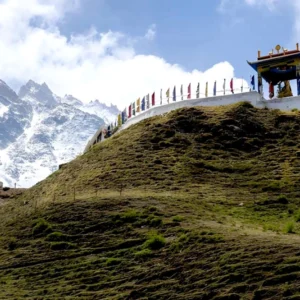
Temples & Peaks of Nepal

8 Days

The Temples & Peaks of Nepal journey begins in Kathmandu and takes you through the cultural heart of Nepal into the scenic landscapes of Pokhara and Lower Mustang. Combining sacred temples, Buddhist heritage, Himalayan viewpoints, peaceful lakes, and traditional mountain villages, the journey offers a varied experience of Nepal’s cultural and natural diversity. Travel from the spiritual landmarks of Kathmandu to the lakeside surroundings of Pokhara before following the spectacular Kali Gandaki Valley towards the high mountain landscapes of Mustang.

Explore Pashupatinath Temple, Bagmati River Aarati, Swayambhunath Stupa, Sarangkot, Pumdikot Shiva Statue, and Begnas Lake, then continue through Marpha, Jomsom, Thini, and Kagbeni to the sacred Muktinath Temple, revered by both Hindus and Buddhists. The return journey includes Tatopani Hot Springs, followed by Patan Durbar Square and, if time permits, Budhanilkantha Temple in Kathmandu. Combining spiritual heritage, Himalayan scenery, traditional villages, and scenic overland travel, this journey offers a memorable way to explore Nepal with Monkvana.

ℹ️ Price Information

The displayed price is per person, based on a typical group size of 5–8 travellers. The final price may vary depending on your selected departure date and group size. Please see the Scheduled Departures & Group Discounts section below for available departure dates and applicable group rates.

  • Kathmandu
  • Kathmandu
  • Car, Flight
  • Hotel & lodge
  • 3,760 Meters
  • March -November
  • 3 Meals a Day
  • Included
  • HMT-302
  • 2-16 People
  • Nepali Guide
  • English | German
  • Tea House Trek

Trip Overview

Temples & Peaks of Nepal is an 8-day cultural and scenic journey that brings together Nepal’s important religious landmarks, Himalayan landscapes, traditional mountain settlements, lakes, viewpoints, and sacred pilgrimage sites. The journey follows a diverse route from the Kathmandu Valley to Pokhara and onward into Lower Mustang, before returning to Kathmandu. Designed for travellers who want to experience the cultural and natural highlights of Nepal without trekking, the tour combines comfortable overland travel with carefully selected sightseeing stops and opportunities to experience the country’s Hindu and Buddhist traditions.

The journey is suitable for families, couples, senior travellers, pilgrims, and travellers interested in Nepalese culture, religion, mountain scenery, and traditional communities. Travel is arranged by private vehicle, providing greater flexibility along the route and allowing stops at scenic viewpoints, cultural sites, villages, and other places of interest. The landscapes change considerably throughout the journey, from the historic cities and temples of the Kathmandu Valley to the green hills and lakes around Pokhara and finally the dry, high-altitude environment of Lower Mustang.

Kathmandu – Sacred Heritage and Spiritual Traditions

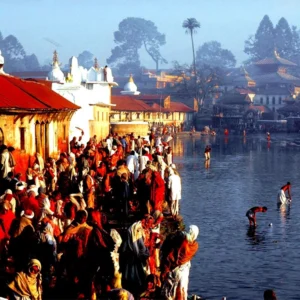
The journey begins in Kathmandu, the cultural and spiritual centre of Nepal. The Kathmandu Valley is home to numerous temples, stupas, courtyards, and historic monuments representing centuries of Hindu and Buddhist traditions. One of the principal visits is to Pashupatinath Temple, one of Nepal’s most important Hindu pilgrimage sites and a major centre of worship dedicated to Lord Shiva. Located beside the sacred Bagmati River, the temple complex provides an opportunity to observe Nepal’s living religious traditions and distinctive temple architecture.

In the evening, experience the Bagmati River Aarati, a spiritual ceremony held along the river near Pashupatinath. The atmosphere created by devotional music, lamps, chanting, and the gathering of worshippers offers a memorable introduction to the religious traditions of Kathmandu.

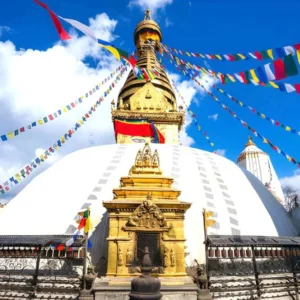
Continue to Swayambhunath Stupa, one of the Kathmandu Valley’s best-known Buddhist monuments. Often associated with the famous Buddha eyes overlooking the valley, the hilltop stupa combines religious significance with broad views across Kathmandu. The visit provides an insight into the close relationship between Hindu and Buddhist traditions that characterises much of Nepal’s cultural heritage.

Pokhara – Lakes, Mountains and Himalayan Views

From Kathmandu, travel overland to Pokhara, one of Nepal’s most popular scenic destinations. Set beside Phewa Lake and surrounded by hills and Himalayan peaks, Pokhara offers a noticeable change from the historic and urban environment of Kathmandu. The city is an ideal base for experiencing mountain scenery without undertaking a long trek.

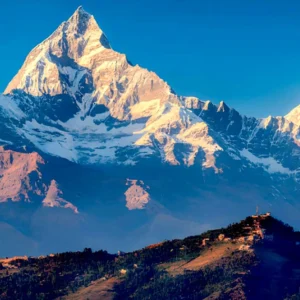
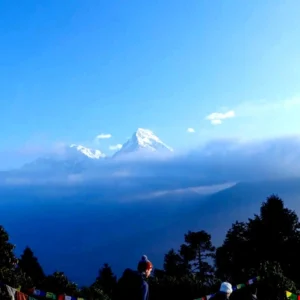
An early morning visit to Sarangkot provides one of the journey’s principal scenic experiences. From this hilltop viewpoint, weather permitting, you can watch the sunrise illuminate the Himalayan ranges, including Annapurna, Dhaulagiri, and Machhapuchhre (Fishtail). The changing colours of the mountains and the surrounding hills make Sarangkot an especially rewarding viewpoint in the early morning.

Continue to the impressive Pumdikot Shiva Statue, situated on a hill overlooking the Pokhara Valley. The large statue of Lord Shiva is both a religious landmark and a scenic viewpoint, with views extending across the surrounding landscape towards the Himalayan ranges.

The route also includes Begnas Lake, one of Pokhara’s quieter and more peaceful lakes. Surrounded by green hills and rural landscapes, Begnas provides a contrast to the more developed areas around central Pokhara. The visit allows time to enjoy the natural surroundings and observe a more relaxed side of the Pokhara region.

Lower Mustang – Kali Gandaki Valley and Mountain Villages

From Pokhara, the journey continues towards Lower Mustang, following the spectacular Kali Gandaki Valley. As the road climbs towards the mountains, the landscape gradually changes from green middle hills and cultivated valleys to the drier and more rugged environment of the Trans-Himalayan region.

One of the important stops along this route is Marpha, a picturesque mountain settlement famous for its traditional whitewashed houses, narrow stone-paved streets, apple orchards, and mountain surroundings. The village reflects the distinctive architecture and lifestyle of the Mustang region and provides an opportunity to experience a traditional Himalayan settlement at a relaxed pace.

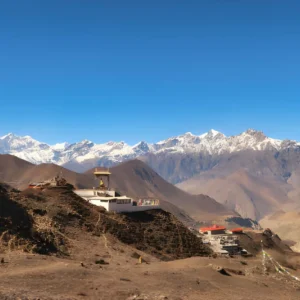
Continue to Jomsom, the administrative centre and principal town of Mustang. Located beside the Kali Gandaki River and surrounded by barren mountain landscapes, Jomsom is an important gateway to the Mustang region. Its location provides a striking contrast between the lush landscapes around Pokhara and the dry, high-altitude environment further north.

From Jomsom, explore Thini Village, a traditional settlement located in the surrounding mountain landscape. Thini offers an opportunity to experience local village life and the cultural character of the Mustang region away from the main road.

Continue to Kagbeni, one of the most historically distinctive settlements in the Kali Gandaki Valley. Situated at the gateway to Upper Mustang, Kagbeni is known for its traditional architecture, narrow lanes, Buddhist monasteries, prayer flags, and dramatic location beside the Kali Gandaki River. The village has long been associated with the ancient trans-Himalayan trade routes and remains an important cultural landmark in the region.

Muktinath – Sacred Himalayan Pilgrimage

The principal spiritual and Himalayan highlight of the journey is Muktinath, a sacred pilgrimage destination revered by both Hindus and Buddhists. Located at a high elevation in the Mustang region, Muktinath is surrounded by dramatic mountain landscapes and holds deep religious significance.

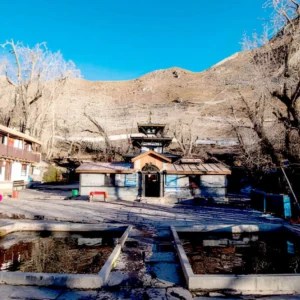
At Muktinath Temple, visitors can explore the temple complex and its important religious features, including the 108 sacred water spouts. The pilgrimage site is also associated with Jwala Mai Temple, known for its naturally occurring eternal flame. The combination of sacred water, natural flame, Buddhist and Hindu traditions, and the surrounding Himalayan environment gives Muktinath a distinctive spiritual character.

For Hindu pilgrims, Muktinath is an important destination associated with Lord Vishnu and the pursuit of spiritual liberation. For Buddhists, the area is also regarded as a sacred site, known as Chumig Gyatsa, meaning “Hundred Waters” in Tibetan Buddhist tradition. The coexistence of these traditions makes Muktinath one of the most significant cultural and religious destinations in the Himalayan region.

Return Journey – Tatopani and Kathmandu Heritage

After visiting Muktinath, descend through the Kali Gandaki Valley towards Pokhara. The return journey provides another opportunity to appreciate the dramatic changes in landscape along the valley. Depending on road conditions and the available time, there may be an opportunity to stop at Tatopani Hot Springs.

Tatopani is known for its natural hot springs, where travellers can relax in the warm mineral-rich water while surrounded by the hills of the Kali Gandaki region. The stop offers a pleasant contrast to the long mountain journey and provides time to unwind before continuing towards Pokhara.

From Pokhara, continue by private vehicle towards Kathmandu. The return journey allows the landscape to change once again, from the Himalayan foothills and river valleys towards the Kathmandu Valley.

In Kathmandu, visit Patan Durbar Square, one of the major historical attractions of the Kathmandu Valley. Located in the historic city of Patan, the square is renowned for its Newari architecture, temples, courtyards, stone and metal craftsmanship, and traditional artistic heritage. The visit adds another important cultural dimension to the journey and complements the religious and Himalayan experiences encountered earlier in the tour.

Final Cultural Visit

On the final day, if the departure schedule permits, visit Budhanilkantha Temple, famous for its remarkable reclining stone image of Lord Vishnu. The large statue lies in a sacred water pool and is one of the Kathmandu Valley’s distinctive religious landmarks. This final visit provides a fitting conclusion to a journey centred on Nepal’s diverse spiritual traditions.

From the ancient temples and Buddhist monuments of Kathmandu, through the lakes and Himalayan viewpoints of Pokhara, to the traditional villages and sacred landscapes of Lower Mustang, Temples & Peaks of Nepal offers a broad introduction to Nepal’s cultural and natural diversity. The journey combines pilgrimage, heritage, mountain scenery, traditional architecture, and scenic overland travel without requiring trekking, making it a practical way to experience some of the country’s most distinctive destinations in a single carefully planned itinerary.

Trip Highlights

  • Explore Thamel, Basantapur Durbar Square, Indra Chowk and Ason Bazaar, discovering Kathmandu’s heritage, markets and local everyday life.
  • Explore Swayambhunath Stupa and Patan Durbar Square, showcasing Buddhist heritage, Hindu traditions, Newari architecture, and artistry.
  • Discover Pokhara through Sarangkot, Pumdikot Shiva Statue, and Begnas Lake, combining mountain views, culture, and peaceful scenery.
  • Watch the Sarangkot sunrise and enjoy sweeping Himalayan views of Annapurna, Dhaulagiri, and Machhapuchhre from the hilltop.
  • Follow the Kali Gandaki Valley into Lower Mustang, where rugged terrain, deep valleys, and high mountains create a Trans-Himalayan landscape.
  • Experience Marpha, Jomsom, Thini, and Kagbeni, with traditional homes, ancient culture, local communities, and dramatic mountain surroundings.
  • Pay homage at Muktinath Temple, visiting the 108 water spouts and sacred Jwala Mai Temple in this revered Himalayan pilgrimage site.
  • Unwind at Tatopani Hot Springs, an optional relaxing stop during the return journey from Mustang through the scenic Kali Gandaki Valley.
  • Enjoy a private-vehicle journey linking sacred sites, heritage towns, mountain villages, peaceful lakes, and spectacular Himalayan landscapes.

Tour Itinerary

  • Day
    01

    Welcome to Kathmandu & Explore Basantapur

    Upon arrival at Tribhuvan International Airport in Kathmandu, you will be warmly welcomed by a representative of Monkvana | Himalayan Monks Sp. z o.o., operating through its local partner, Jagadamba Holidays. Our representative will be waiting with an official Monkvana sign and a traditional marigold garland to welcome you to Nepal.

    You will then be transferred by private vehicle to your hotel. Stay in Thamel at Hotel Kailash Kutee in a twin-sharing room with a private bathroom, with breakfast and dinner included. For late-night arrivals, transportation will be arranged according to your arrival time. Your representative will also provide information about the tour briefing and group meeting. During the briefing, we will review your travel plans and included services and introduce you to your trekking or tour guide. Before the journey begins, all participants will complete the required travel and liability forms. Any outstanding tour balance should also be settled during the meeting.

    Complimentary Monkvana Welcome Exploration Tour

    For guests arriving in Kathmandu before 3:00 PM on Day 1, we warmly invite you to join our complimentary Monkvana Welcome Exploration Tour. This relaxed walking experience is offered as a special welcome to Nepal and provides an opportunity to discover the historic heart of Kathmandu soon after arrival.

    The tour begins with a gentle walk to Basantapur Durbar Square, the former royal palace area of Nepal and one of the historic centres of Kathmandu. Here, you can explore the palace courtyards, temples, and surrounding heritage streets before continuing through the lively local markets of Indra Chowk and Ason Bazaar.

    These traditional markets are an important part of everyday life in Kathmandu, where local people shop for a wide range of goods used throughout different stages of life, including everyday household items and products associated with religious and cultural occasions. After exploring the markets and experiencing the atmosphere of old Kathmandu, we return to the hotel. The Monkvana Welcome Exploration Tour offers a gentle introduction to the city and a chance to experience the local side of Kathmandu beyond its main tourist attractions.

    3 hour
    Breakfast + Dinner
    Hotel Kailash Kutee
  • Day
    02

    Swayambhu Sightseeing & Scenic Drive to Pokhara

    After breakfast, visit Swayambhunath Stupa, also known as the Monkey Temple, one of Kathmandu Valley’s most important Buddhist heritage sites and a UNESCO World Heritage Site. Located on a hilltop overlooking the valley, the ancient stupa is recognised by its iconic golden spire and the Buddha’s all-seeing eyes. Prayer flags flutter in the mountain breeze while monkeys move around the temple complex, adding to its distinctive atmosphere. From the hilltop, you can also enjoy panoramic views across Kathmandu Valley before continuing your journey westwards.

    After visiting Swayambhunath, begin the scenic drive to Pokhara, covering approximately 210 km in around 7–8 hours via the Prithvi Highway. The route follows the Trishuli River through green hills, terraced farmland, riverside settlements and dramatic river gorges. Along the way, there are opportunities to stop for refreshments, stretch your legs and enjoy views of the surrounding countryside. On clear days, distant Himalayan peaks may also be visible, adding to the scenic character of the journey.

    Upon arrival in Pokhara, check in at Hotel Silver Oaks Inn in a twin-sharing room with a private bathroom, with breakfast and dinner included. The evening is free to relax or explore the Lakeside area, with its lakeside promenade, shops, cafés and restaurants. You can also take a peaceful walk beside Phewa Lake and enjoy the relaxed atmosphere of this popular Himalayan city.

    8 minute
    Breakfast + Dinner
    The Silver Oaks Inn
  • Day
    03

    Sarangkot Sunrise & Pokhara Sightseeing Tour

    Start early with a short drive to Sarangkot (1,592 m), one of the most popular viewpoints near Pokhara. Arrive in time to watch the sunrise over the Himalayas, as the first light gradually illuminates Annapurna (8,091 m), Machhapuchhre (6,993 m) and Dhaulagiri (8,167 m). From the hilltop, enjoy wide views across the Annapurna range and Pokhara Valley. After the sunrise experience, return to your hotel for breakfast before continuing with the day’s sightseeing.

    Next, visit the Pumdikot Shiva Statue, a 51-foot-high statue of Lord Shiva situated at approximately 1,600 m on a hill overlooking Pokhara Valley. The site combines religious significance with panoramic views of Phewa Lake, Pokhara Valley and the surrounding mountains. Continue to Begnas Lake (650 m), a quieter and more peaceful setting surrounded by green hills and forests. Enjoy a leisurely walk along the lakeshore and take time to appreciate the natural surroundings away from the busier areas of Pokhara.

    In the afternoon, return to Pokhara and enjoy free time around Phewa Lake and the Lakeside area. You may explore the lakeside promenade, browse local shops and markets, or relax at one of the cafés and restaurants. Optional boating on Phewa Lake is also available, including the possibility of visiting Tal Barahi Temple on the small island in the lake. Today’s sightseeing involves only short local drives, leaving time to enjoy Pokhara at a relaxed pace. Stay in Pokhara at Hotel Silver Oaks Inn in a twin-sharing room with a private bathroom, with breakfast and dinner included.

    7 hour
    Breakfast + Dinner
    The Silver Oaks Inn
  • Day
    04

    Drive to Jomsom via Marpha Village, Mustang

    After breakfast, depart Pokhara by private vehicle and travel towards Jomsom, covering approximately 162 km in around 5–6 hours. The route follows the Kali Gandaki River through the changing landscapes of Lower Mustang, gradually transitioning from the green hills around Pokhara to steeper cliffs, rocky valleys and the dry terrain of the Himalayan rain-shadow region. En route, stop at Galeshwor Dham in Galeshwore, a Hindu pilgrimage site dedicated to Lord Shiva and situated beside the Kali Gandaki River. The temple complex provides an opportunity to experience an important local religious site while taking a short break from the journey.

    Continue north through the Kali Gandaki Valley, passing mountain villages, dramatic rock formations and sections of the historic trans-Himalayan trade route. As the road gains altitude, the landscape becomes increasingly dry and rugged, with views of the surrounding mountains and valleys. Stop at Rupse Waterfall, where water cascades down the rocky cliffs towards the Kali Gandaki River. After the stop, continue towards Marpha, a traditional Thakali village known for its whitewashed houses, stone-paved lanes, Buddhist heritage and apple orchards. Take some time to walk through the village and explore its traditional architecture, local monastery and small shops offering locally produced apple products.

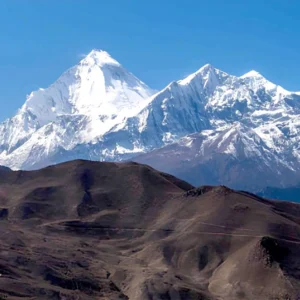
    After visiting Marpha, continue the drive to Jomsom (2,720 m), the administrative centre of Mustang District and an important gateway to the Lower Mustang region. Situated in the Kali Gandaki Valley, Jomsom is surrounded by dry mountain landscapes and views towards the Annapurna and Dhaulagiri ranges. Upon arrival, check in at Hotel Moon Light and settle into your twin-sharing room with a private bathroom. Breakfast and dinner are included. The remainder of the evening is free to rest, take a gentle walk through Jomsom or explore the local surroundings while adjusting to the higher altitude.

    6 hour
    Breakfast + Dinner
    Tea House
  • Day
    05

    Explore Jomsom & Drive to Muktinath via Kagbeni

    After breakfast, begin the day with a short exploration of Jomsom (2,743 m), the administrative centre of Mustang and an important market town in the Kali Gandaki Valley. Continue to Dhumba Lake, a peaceful lake just outside Jomsom, where you can enjoy a gentle walk and views of the surrounding mountains. The lake is also of cultural importance to the local Thakali community. From Dhumba Lake, continue to Thini Village, one of the traditional settlements in the area. Walk through its narrow lanes and explore the stone houses, local monastery, terraced fields and traditional irrigation channels while experiencing the rural character of the Mustang region.

    From Thini, continue by private vehicle through the Kali Gandaki Valley towards Kagbeni, an historic settlement and traditional gateway to Upper Mustang. Explore its narrow stone alleys, traditional mud-and-stone houses, prayer walls and Kag Chode Monastery, known for its historic Buddhist paintings and images. Kagbeni's location at the confluence of the Kali Gandaki and Jhong Rivers adds to its distinctive landscape and cultural character. After sightseeing in Kagbeni, continue towards Muktinath, following the rugged mountain road through the high-altitude landscape of Lower Mustang.

    The drive from Jomsom to Muktinath via Thini and Kagbeni covers approximately 23 km and takes around 1 hour by private vehicle, depending on road conditions and sightseeing stops. Muktinath (3,760 m) is one of Nepal's important pilgrimage sites and is sacred to both Hindus and Buddhists. The temple complex is situated beneath the Thorong La area and offers views towards the surrounding Himalayan landscape. Upon arrival, check in at Hotel Eureka Inn and settle into your twin-sharing room with a private bathroom. Breakfast and dinner are included. The remainder of the evening is free to rest and enjoy the quiet mountain surroundings before visiting Muktinath Temple the following morning.

    6 hour
    Breakfast + Lunch + Dinner
    Tea House
  • Day
    06

    Explore Muktinath Temple & Drive to Pokhara

    Begin the morning with a visit to Muktinath Temple (3,760 m), one of Nepal’s important pilgrimage sites for both Hindus and Buddhists. The temple complex is located in the high-altitude landscape of Mustang, with views towards the surrounding Annapurna and Dhaulagiri ranges. The site is known for its natural flame, traditionally regarded as sacred, and the 108 water spouts where pilgrims perform ritual bathing. After completing your visit to Muktinath, begin the scenic drive back towards Pokhara (822 m). The journey covers approximately 185 km and takes around 6–7 hours, depending on road and traffic conditions.

    The route descends through the Kali Gandaki Valley, passing from the dry mountain landscapes of Mustang into greener hills and river valleys. Stop at Tatopani (1,190 m), a well-known natural hot-spring destination beside the Kali Gandaki River. Here, you can take time to relax in the warm mineral-rich water and enjoy a break from the journey. The surrounding vegetation and river scenery provide a noticeable contrast to the high-altitude landscapes of Mustang before continuing towards the lower valleys.

    After the stop at Tatopani, continue by private vehicle via Beni, an important market town and the administrative centre of Myagdi District, situated near the confluence of the Kali Gandaki and Myagdi Rivers. The road continues through hillside settlements, terraced farmland and green valleys before reaching Pokhara. Upon arrival, check in at Hotel Silver Oaks Inn and settle into your twin-sharing room with a private bathroom. Breakfast and dinner are included. The evening is free to relax, take a walk around Phewa Lake or explore the restaurants and cafés in the Lakeside area.

    7 hour
    Breakfast + Lunch + Dinner
    The Silver Oaks Inn
  • Day
    07

    Scenic Drive to Kathmandu & Explore Patan Durbar Square

    After breakfast, leave Pokhara and travel towards Kathmandu by private vehicle. The drive covers approximately 210 km and takes around 6–7 hours, depending on road and traffic conditions. Follow the Prithvi Highway through the middle hills of Nepal, with sections of the road running alongside the Trishuli River. The journey passes through small settlements, cultivated hillsides and river valleys, giving you an opportunity to observe everyday life in rural Nepal. Short stops can be made along the way for refreshments and rest before continuing towards the Kathmandu Valley.

    On reaching Patan, visit Patan Durbar Square, a UNESCO World Heritage Site and one of the valley’s important centres of Newari art and architecture. Walk through the historic palace area and its courtyards, where you can see traditional temples, shrines and finely detailed wood and stone craftsmanship. Visit Krishna Mandir, an important stone temple dedicated to Lord Krishna, and explore the Patan Museum, located within the former royal palace and displaying a collection of religious art and traditional artefacts. The surrounding streets also provide an opportunity to see local workshops, temples and the daily activities of Patan’s residents.

    After the sightseeing, continue to Thamel in Kathmandu and check in at Hotel Kailash Kutee. Accommodation is provided in a twin-sharing room with a private bathroom, with breakfast and dinner included. The rest of the evening is free for you to relax or explore Thamel at your own pace, including its shops, handicraft stores, cafés and restaurants.

    7 hour
    Breakfast + Dinner
    Hotel Kailash Kutee
  • Day
    08

    Budhanilkantha Temple Visit & Airport Transfer

    As your journey through Nepal comes to an end, enjoy a final morning at your own pace and reflect on the varied landscapes, cultural heritage and local experiences you have encountered throughout the trip.

    For your departure, a representative of Monkvana | Himalayan Monks Sp. z o.o., operating through its local partner Jagadamba Holidays, will meet you at your hotel approximately 3.5 hours before your scheduled flight and arrange your private transfer to Tribhuvan International Airport, Kathmandu.

    Monkvana Complimentary Tour:
    Travellers with an afternoon flight back home may join a complimentary morning sightseeing tour after breakfast. The tour starts at approximately 8:30 am and usually takes 2–3 hours, allowing enough time to return to the hotel and continue to the airport according to your flight schedule. The sightseeing programme is subject to the available time on the day.

    Thank you for travelling with Monkvana | Himalayan Monks Sp. z o.o. and Jagadamba Holidays. We hope to welcome you again on another journey through Nepal and the Himalayas.

    3 minute
    Breakfast
    None

Cost Includes

  • Airport arrival and departure transfers in Nepal.
  • Annapurna Conservation Area permit for the Muktinath tour.
  • Hotel and guesthouse accommodation as per the tour itinerary.
  • Twin-share rooms with private bathrooms during your stay.
  • Comfortable hotels as specified in the tour itinerary.
  • Deluxe private vehicle with an experienced driver.
  • Daily breakfast and dinner at your accommodation.
  • Mineral water provided during journeys by private vehicle.
  • Experienced English-speaking city tour guide.
  • All entrance fees for sightseeing as per the tour itinerary.
  • Pokhara boating fees as specified in the tour itinerary.
  • All sightseeing activities as per the tour itinerary.
  • Farewell dinner in Kathmandu before your departure home.
  • All applicable government taxes and service charges.

Cost Excludes

  • Single room/single tent surcharge (on request)
  • Round trip/one way international flight ticket to Nepal.
  • Tourist visa for Nepal (30-50 $, depending on length of stay)
  • Personal Insurance (covers: Trip/flight cancellation, helicopter rescue)
  • Meals (lunch, dinner) at hotels in Kathmandu, Pokhara and other cities
  • Drinks (soft, hot or mineral/boiled water) during the lodge trek
  • Any personal trekking and/climbing equipment for trekking in Nepal
  • Hotel expenses in case of early return from trekking for any reason
  • Costs due to flight cancellations & extra porters/horses during the trek
  • Additional costs incurred due to any reason beyond Jagdamba’s control
  • More evidence about pandemics like COVID-19 if needed in the future.
  • Personal expenses during the trek (phone, wifi, shower, charging etc.)
  • Other costs and things that are not mentioned in the service inclusion
  • Gratuity for trekking staff (recommended: 9€ /10$ per traveler per day)

Frequently Asked Questions (FAQs)

Do I need a visa to travel to Nepal?

Yes. Most travelers require a Nepal tourist visa, which can be obtained on arrival at Tribhuvan International Airport (Kathmandu) or from a Nepalese embassy in advance.

What documents are required for a Nepal visa on arrival?

You need a passport valid for at least 6 months, one passport-size photo, a completed visa application form, and the visa fee (USD cash recommended).

Are international flights to Nepal included in the package?

No. International flights are not included in the package price. We can advise on airlines and recommended arrival times.

Which airport do international flights arrive at in Nepal?

All international flights arrive at Tribhuvan International Airport (KTM) in Kathmandu.

Is airport pickup provided in Kathmandu?

Yes. Airport transfers are included. Our representatives will welcome you at the airport with a company placard and assist with hotel transfer.

What is the Gokyo Lakes Trek?

The Gokyo Lakes Trek is a breathtaking Himalayan journey in Nepal’s Everest region, famous for its turquoise glacial lakes and stunning mountain views.

Is the Gokyo Lakes Trek suitable for beginners?

Yes, the Gokyo Lakes Trek is suitable for beginners with good physical fitness and proper acclimatization, but it is more challenging than lower-altitude treks.

What is the difficulty level of this trip?

The overall difficulty is moderate, involving 5–8 hours of trekking per day and Grade II–III rafting.

What is the best time to do the Gokyo Lakes Trek?

The best time to do the Gokyo Lakes Trek is during spring (March–May) and autumn (September–November), when the weather is stable and mountain views are crystal clear.

How is altitude sickness managed during the trek?

The itinerary includes gradual altitude gain, acclimatization days, and monitoring by experienced guides to minimize altitude-related issues.

What type of accommodation is provided?

Accommodation on the Gokyo Lakes Trek is mainly in teahouses (mountain lodges), offering simple yet comfortable rooms with twin beds, shared bathrooms, and warm blankets.
Meals are served in a common dining area, and facilities become more basic as altitude increases.

Are meals included during the trek?

Yes, meals are included during the Gokyo Lakes Trek, typically covering breakfast, lunch, and dinner each day while on the trail.
Meals are served at teahouses and usually include a mix of Nepali, Tibetan, and basic Western dishes to keep you energized at high altitude.

Do I need special trekking equipment?

No technical equipment is required. Basic trekking gear is sufficient, and all equipment is provided.

What makes the Gokyo Lakes Trek unique?

The Gokyo Lakes Trek is unique for its stunning turquoise glacial lakes, fewer crowds compared to Everest Base Camp, and the climb to Gokyo Ri, which offers panoramic views of four 8,000-meter peaks—Everest, Lhotse, Makalu, and Cho Oyu—from a single viewpoint.