The Temples & Peaks of Nepal journey begins in Kathmandu and takes you through the cultural heart of Nepal into the scenic landscapes of Pokhara and Lower Mustang. Combining sacred temples, Buddhist heritage, Himalayan viewpoints, peaceful lakes, and traditional mountain villages, the journey offers a varied experience of Nepal’s cultural and natural diversity. Travel from the spiritual landmarks of Kathmandu to the lakeside surroundings of Pokhara before following the spectacular Kali Gandaki Valley towards the high mountain landscapes of Mustang.
Explore Pashupatinath Temple, Bagmati River Aarati, Swayambhunath Stupa, Sarangkot, Pumdikot Shiva Statue, and Begnas Lake, then continue through Marpha, Jomsom, Thini, and Kagbeni to the sacred Muktinath Temple, revered by both Hindus and Buddhists. The return journey includes Tatopani Hot Springs, followed by Patan Durbar Square and, if time permits, Budhanilkantha Temple in Kathmandu. Combining spiritual heritage, Himalayan scenery, traditional villages, and scenic overland travel, this journey offers a memorable way to explore Nepal with Monkvana.
ℹ️ Price Information
The displayed price is per person, based on a typical group size of 5–8 travellers. The final price may vary depending on your selected departure date and group size. Please see the Scheduled Departures & Group Discounts section below for available departure dates and applicable group rates.
-
Kathmandu
-
Kathmandu
-
Car, Flight
-
Hotel & lodge
-
3,760 Meters
-
March -November
-
3 Meals a Day
-
Included
-
HMT-302
-
2-16 People
-
Nepali Guide
-
English | German
-
Tea House Trek
Trip Overview
Temples & Peaks of Nepal is an 8-day cultural and scenic journey that brings together Nepal’s important religious landmarks, Himalayan landscapes, traditional mountain settlements, lakes, viewpoints, and sacred pilgrimage sites. The journey follows a diverse route from the Kathmandu Valley to Pokhara and onward into Lower Mustang, before returning to Kathmandu. Designed for travellers who want to experience the cultural and natural highlights of Nepal without trekking, the tour combines comfortable overland travel with carefully selected sightseeing stops and opportunities to experience the country’s Hindu and Buddhist traditions.
The journey is suitable for families, couples, senior travellers, pilgrims, and travellers interested in Nepalese culture, religion, mountain scenery, and traditional communities. Travel is arranged by private vehicle, providing greater flexibility along the route and allowing stops at scenic viewpoints, cultural sites, villages, and other places of interest. The landscapes change considerably throughout the journey, from the historic cities and temples of the Kathmandu Valley to the green hills and lakes around Pokhara and finally the dry, high-altitude environment of Lower Mustang.
Kathmandu – Sacred Heritage and Spiritual Traditions
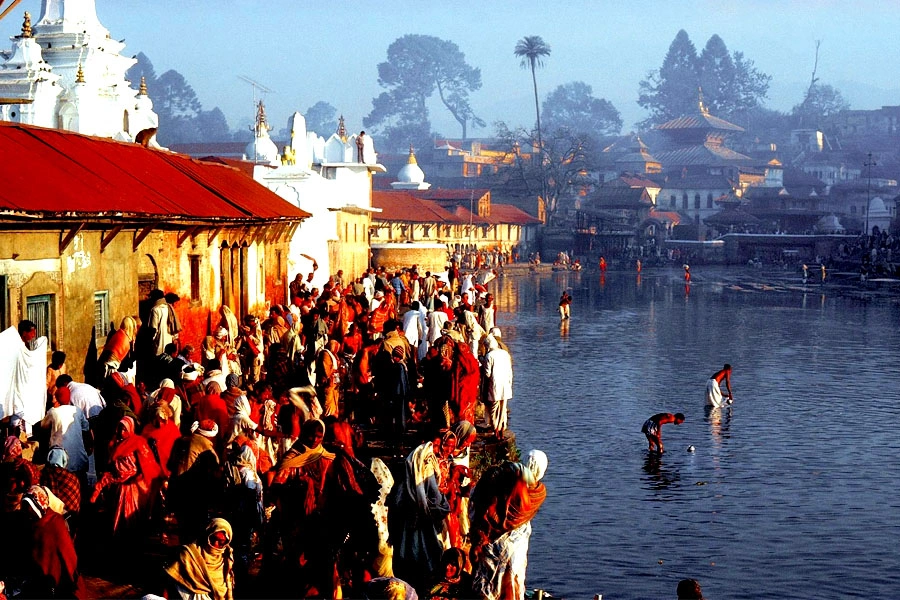
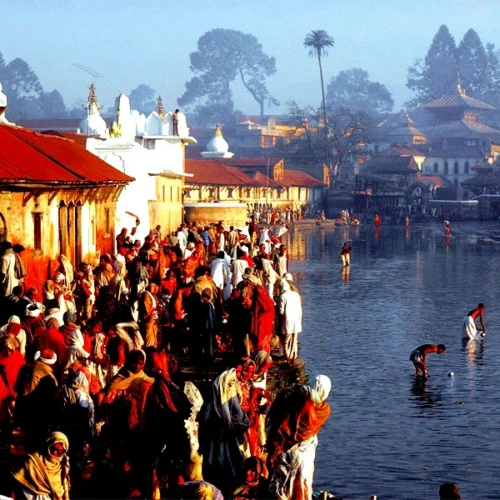
The journey begins in Kathmandu, the cultural and spiritual centre of Nepal. The Kathmandu Valley is home to numerous temples, stupas, courtyards, and historic monuments representing centuries of Hindu and Buddhist traditions. One of the principal visits is to Pashupatinath Temple, one of Nepal’s most important Hindu pilgrimage sites and a major centre of worship dedicated to Lord Shiva. Located beside the sacred Bagmati River, the temple complex provides an opportunity to observe Nepal’s living religious traditions and distinctive temple architecture.
In the evening, experience the Bagmati River Aarati, a spiritual ceremony held along the river near Pashupatinath. The atmosphere created by devotional music, lamps, chanting, and the gathering of worshippers offers a memorable introduction to the religious traditions of Kathmandu.
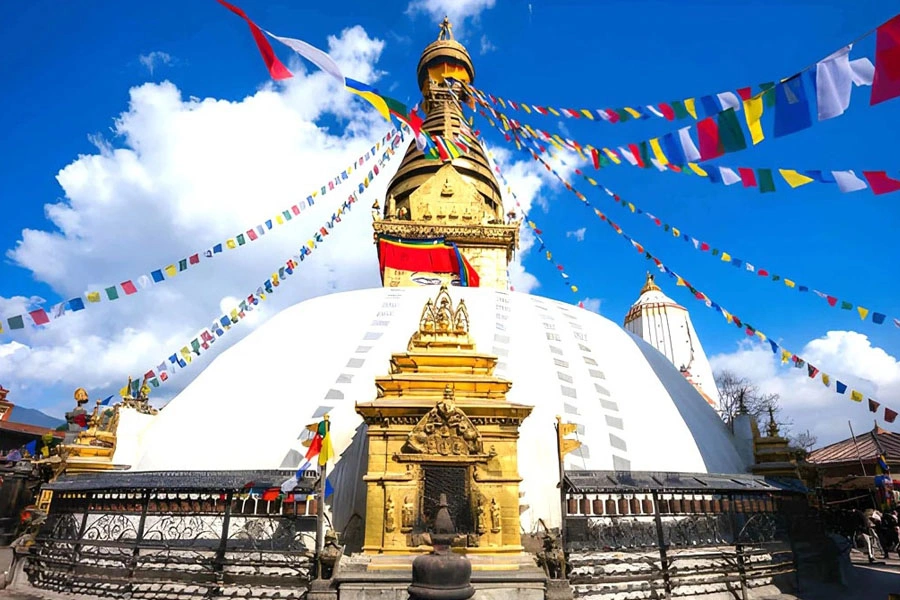
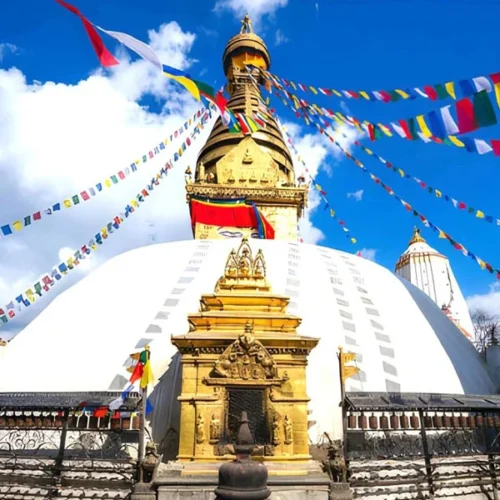
Continue to Swayambhunath Stupa, one of the Kathmandu Valley’s best-known Buddhist monuments. Often associated with the famous Buddha eyes overlooking the valley, the hilltop stupa combines religious significance with broad views across Kathmandu. The visit provides an insight into the close relationship between Hindu and Buddhist traditions that characterises much of Nepal’s cultural heritage.
Pokhara – Lakes, Mountains and Himalayan Views
From Kathmandu, travel overland to Pokhara, one of Nepal’s most popular scenic destinations. Set beside Phewa Lake and surrounded by hills and Himalayan peaks, Pokhara offers a noticeable change from the historic and urban environment of Kathmandu. The city is an ideal base for experiencing mountain scenery without undertaking a long trek.
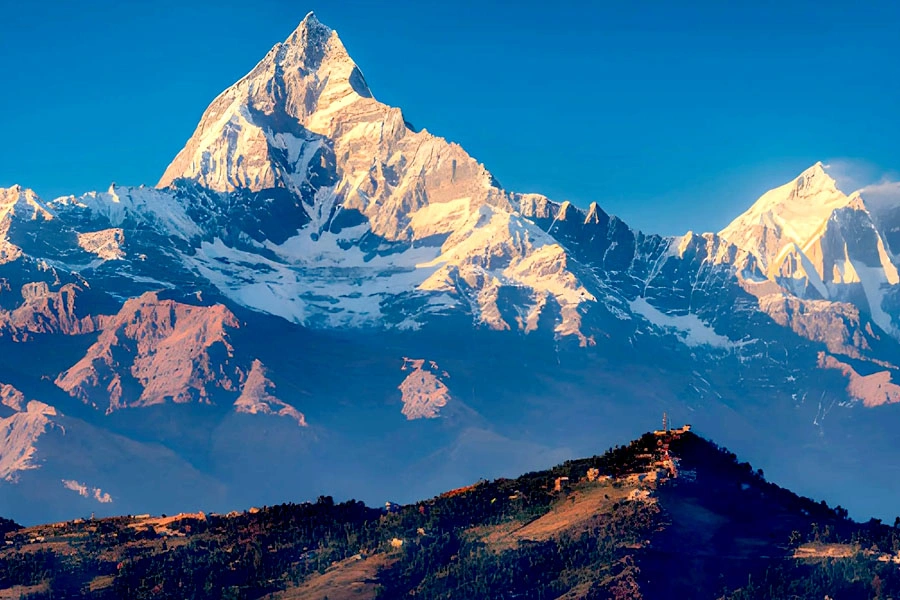
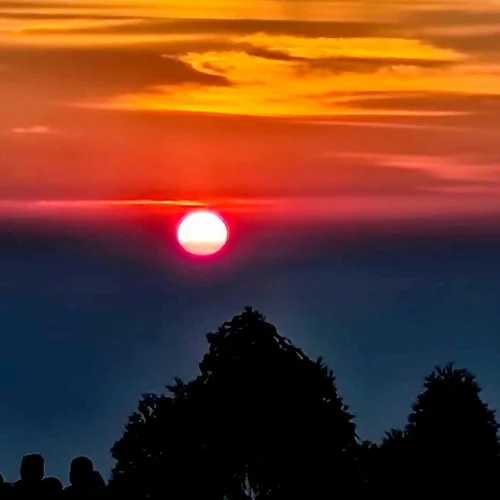
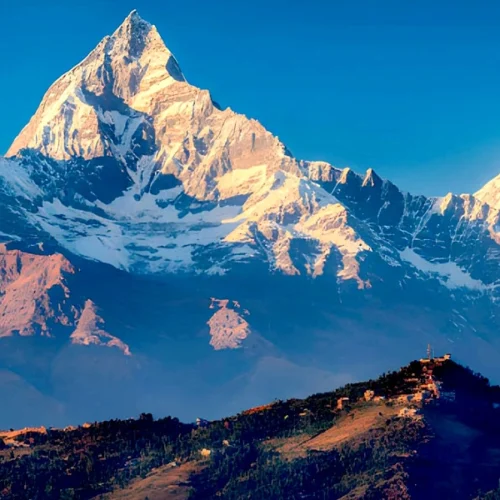
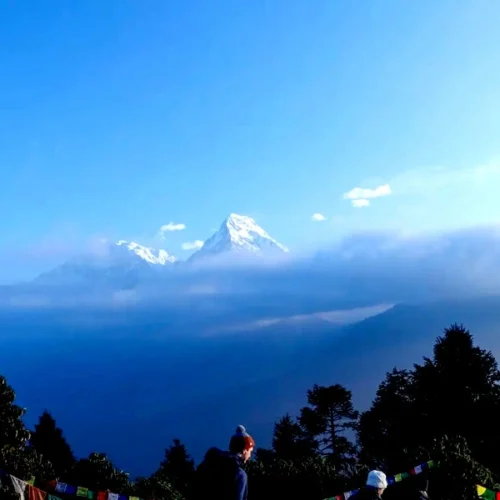
An early morning visit to Sarangkot provides one of the journey’s principal scenic experiences. From this hilltop viewpoint, weather permitting, you can watch the sunrise illuminate the Himalayan ranges, including Annapurna, Dhaulagiri, and Machhapuchhre (Fishtail). The changing colours of the mountains and the surrounding hills make Sarangkot an especially rewarding viewpoint in the early morning.
Continue to the impressive Pumdikot Shiva Statue, situated on a hill overlooking the Pokhara Valley. The large statue of Lord Shiva is both a religious landmark and a scenic viewpoint, with views extending across the surrounding landscape towards the Himalayan ranges.
The route also includes Begnas Lake, one of Pokhara’s quieter and more peaceful lakes. Surrounded by green hills and rural landscapes, Begnas provides a contrast to the more developed areas around central Pokhara. The visit allows time to enjoy the natural surroundings and observe a more relaxed side of the Pokhara region.
Lower Mustang – Kali Gandaki Valley and Mountain Villages
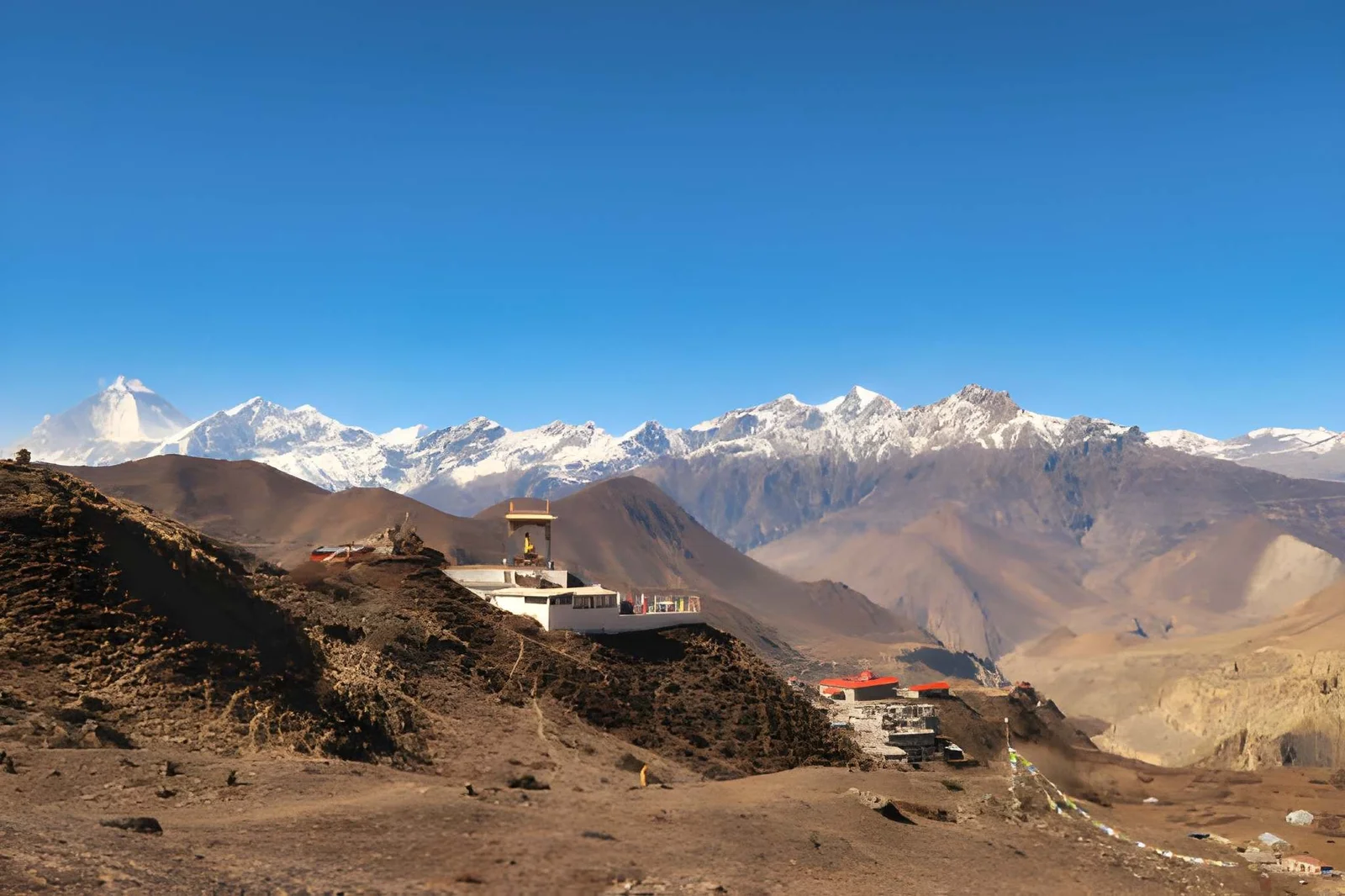
From Pokhara, the journey continues towards Lower Mustang, following the spectacular Kali Gandaki Valley. As the road climbs towards the mountains, the landscape gradually changes from green middle hills and cultivated valleys to the drier and more rugged environment of the Trans-Himalayan region.
One of the important stops along this route is Marpha, a picturesque mountain settlement famous for its traditional whitewashed houses, narrow stone-paved streets, apple orchards, and mountain surroundings. The village reflects the distinctive architecture and lifestyle of the Mustang region and provides an opportunity to experience a traditional Himalayan settlement at a relaxed pace.
Continue to Jomsom, the administrative centre and principal town of Mustang. Located beside the Kali Gandaki River and surrounded by barren mountain landscapes, Jomsom is an important gateway to the Mustang region. Its location provides a striking contrast between the lush landscapes around Pokhara and the dry, high-altitude environment further north.
From Jomsom, explore Thini Village, a traditional settlement located in the surrounding mountain landscape. Thini offers an opportunity to experience local village life and the cultural character of the Mustang region away from the main road.
Continue to Kagbeni, one of the most historically distinctive settlements in the Kali Gandaki Valley. Situated at the gateway to Upper Mustang, Kagbeni is known for its traditional architecture, narrow lanes, Buddhist monasteries, prayer flags, and dramatic location beside the Kali Gandaki River. The village has long been associated with the ancient trans-Himalayan trade routes and remains an important cultural landmark in the region.
Muktinath – Sacred Himalayan Pilgrimage
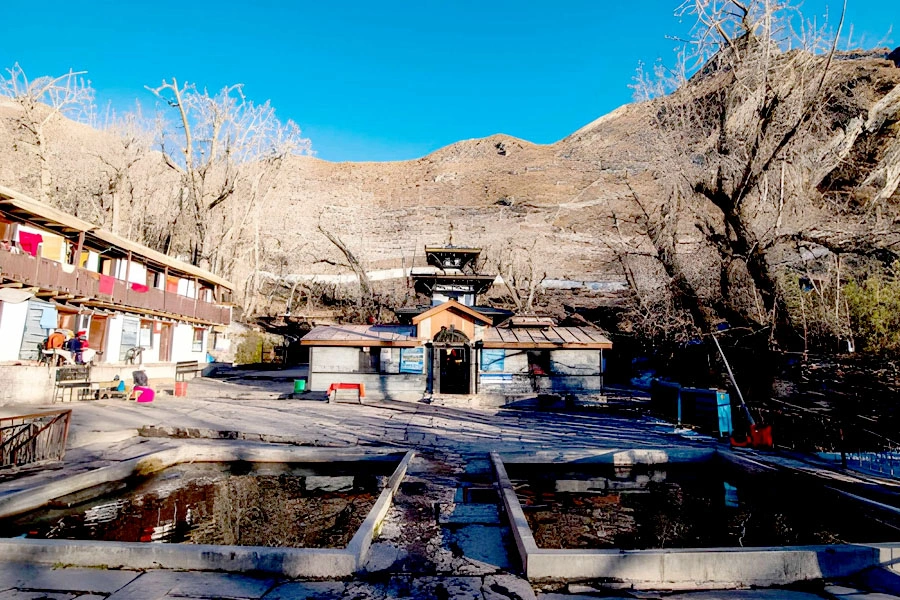
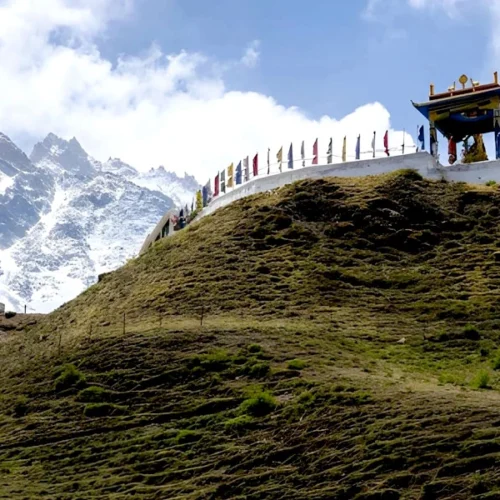
The principal spiritual and Himalayan highlight of the journey is Muktinath, a sacred pilgrimage destination revered by both Hindus and Buddhists. Located at a high elevation in the Mustang region, Muktinath is surrounded by dramatic mountain landscapes and holds deep religious significance.
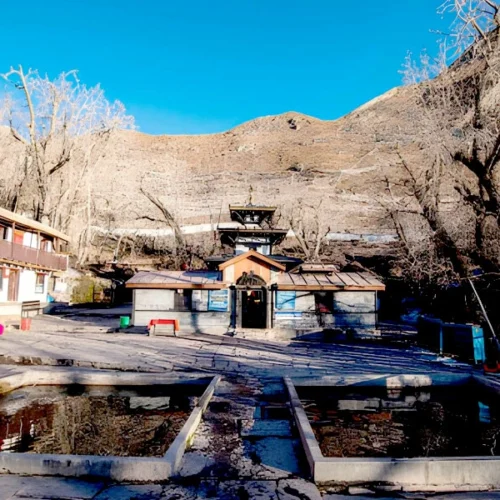
At Muktinath Temple, visitors can explore the temple complex and its important religious features, including the 108 sacred water spouts. The pilgrimage site is also associated with Jwala Mai Temple, known for its naturally occurring eternal flame. The combination of sacred water, natural flame, Buddhist and Hindu traditions, and the surrounding Himalayan environment gives Muktinath a distinctive spiritual character.
For Hindu pilgrims, Muktinath is an important destination associated with Lord Vishnu and the pursuit of spiritual liberation. For Buddhists, the area is also regarded as a sacred site, known as Chumig Gyatsa, meaning “Hundred Waters” in Tibetan Buddhist tradition. The coexistence of these traditions makes Muktinath one of the most significant cultural and religious destinations in the Himalayan region.
Return Journey – Tatopani and Kathmandu Heritage
After visiting Muktinath, descend through the Kali Gandaki Valley towards Pokhara. The return journey provides another opportunity to appreciate the dramatic changes in landscape along the valley. Depending on road conditions and the available time, there may be an opportunity to stop at Tatopani Hot Springs.
Tatopani is known for its natural hot springs, where travellers can relax in the warm mineral-rich water while surrounded by the hills of the Kali Gandaki region. The stop offers a pleasant contrast to the long mountain journey and provides time to unwind before continuing towards Pokhara.
From Pokhara, continue by private vehicle towards Kathmandu. The return journey allows the landscape to change once again, from the Himalayan foothills and river valleys towards the Kathmandu Valley.
In Kathmandu, visit Patan Durbar Square, one of the major historical attractions of the Kathmandu Valley. Located in the historic city of Patan, the square is renowned for its Newari architecture, temples, courtyards, stone and metal craftsmanship, and traditional artistic heritage. The visit adds another important cultural dimension to the journey and complements the religious and Himalayan experiences encountered earlier in the tour.
Final Cultural Visit
On the final day, if the departure schedule permits, visit Budhanilkantha Temple, famous for its remarkable reclining stone image of Lord Vishnu. The large statue lies in a sacred water pool and is one of the Kathmandu Valley’s distinctive religious landmarks. This final visit provides a fitting conclusion to a journey centred on Nepal’s diverse spiritual traditions.
From the ancient temples and Buddhist monuments of Kathmandu, through the lakes and Himalayan viewpoints of Pokhara, to the traditional villages and sacred landscapes of Lower Mustang, Temples & Peaks of Nepal offers a broad introduction to Nepal’s cultural and natural diversity. The journey combines pilgrimage, heritage, mountain scenery, traditional architecture, and scenic overland travel without requiring trekking, making it a practical way to experience some of the country’s most distinctive destinations in a single carefully planned itinerary.
Trip Highlights
- Explore Thamel, Basantapur Durbar Square, Indra Chowk and Ason Bazaar, discovering Kathmandu’s heritage, markets and local everyday life.
- Explore Swayambhunath Stupa and Patan Durbar Square, showcasing Buddhist heritage, Hindu traditions, Newari architecture, and artistry.
- Discover Pokhara through Sarangkot, Pumdikot Shiva Statue, and Begnas Lake, combining mountain views, culture, and peaceful scenery.
- Watch the Sarangkot sunrise and enjoy sweeping Himalayan views of Annapurna, Dhaulagiri, and Machhapuchhre from the hilltop.
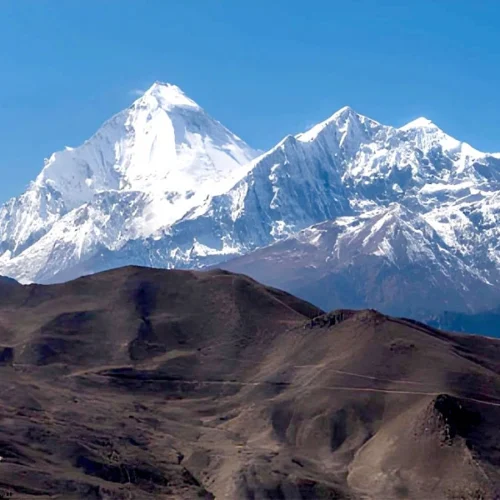
- Follow the Kali Gandaki Valley into Lower Mustang, where rugged terrain, deep valleys, and high mountains create a Trans-Himalayan landscape.
- Experience Marpha, Jomsom, Thini, and Kagbeni, with traditional homes, ancient culture, local communities, and dramatic mountain surroundings.
- Pay homage at Muktinath Temple, visiting the 108 water spouts and sacred Jwala Mai Temple in this revered Himalayan pilgrimage site.
- Unwind at Tatopani Hot Springs, an optional relaxing stop during the return journey from Mustang through the scenic Kali Gandaki Valley.
- Enjoy a private-vehicle journey linking sacred sites, heritage towns, mountain villages, peaceful lakes, and spectacular Himalayan landscapes.


Write a Review